Baby Bakuna Schedule 2026: Free DOH Vaccines vs Private Cost
Confused whether to line up at the health center or pay your private pedia? Here is the clear 2026 breakdown of which baby bakuna are free under the DOH, which private vaccines cost extra, and a free-vs-private peso table you can budget from.
By Renish B, Founder
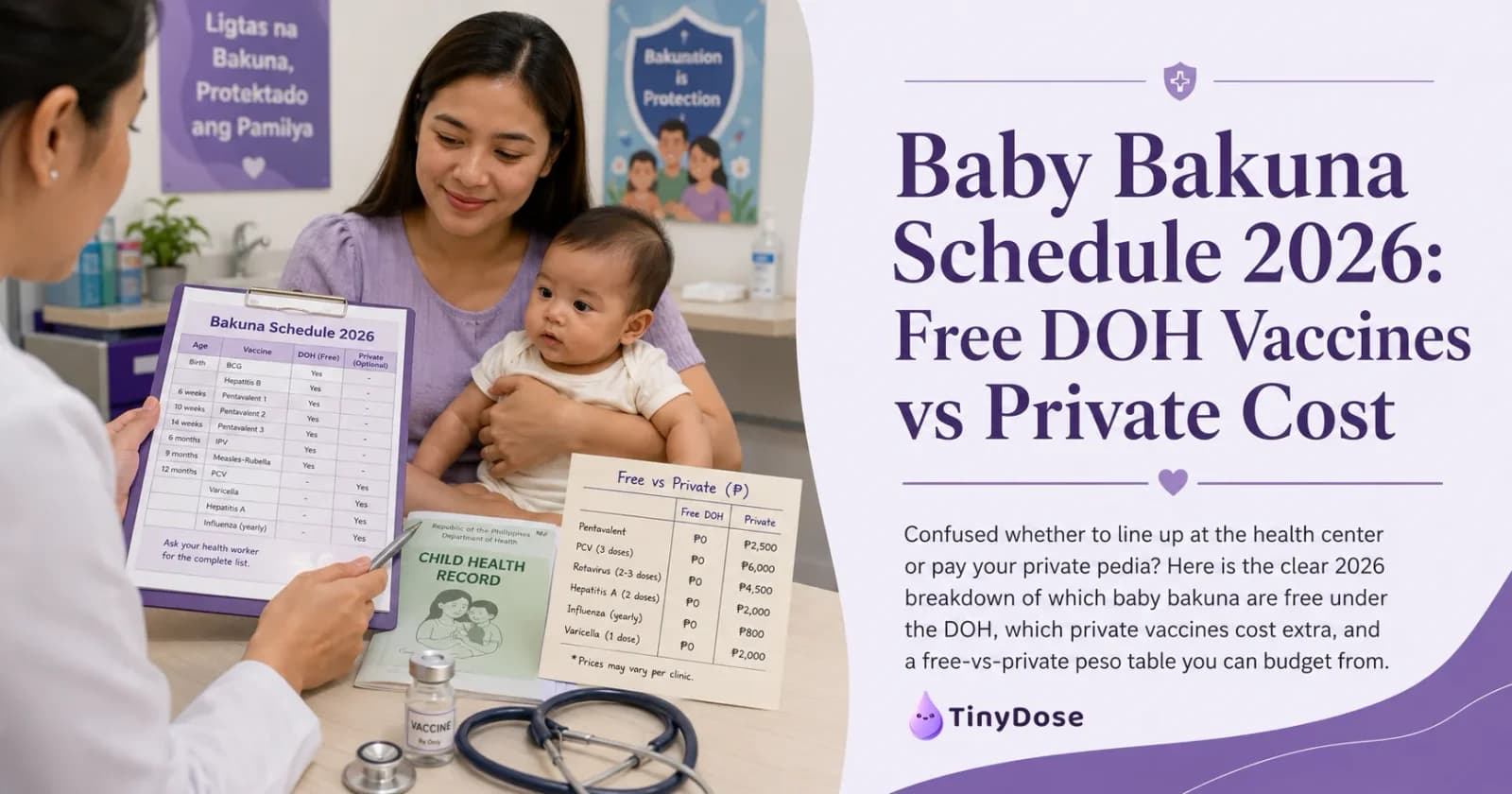
Free or paid? The bakuna question every Filipino parent asks
Your baby's first pedia visit tends to end the same way for everyone. Pure joy, and then the bill. You get handed a bakuna schedule, you see shots stretching across the whole first year, and you start doing quiet math on how many thousands of pesos this is about to cost.
Here is what nobody explains clearly in that moment. There are two separate immunization tracks running in the Philippines, and knowing the difference is what saves you money. One is free. One is not. And you are allowed to use both.
Track one: the free DOH bakuna (EPI)
The Department of Health runs the Expanded Program on Immunization, or EPI. Bring your baby to your local health center or barangay health station and these shots cost you nothing. Not a discount, actually zero.
The free EPI schedule protects your baby against 11 major vaccine-preventable diseases:
- BCG for tuberculosis, given at birth
- Hepatitis B, given at birth
- Pentavalent 5-in-1 (diphtheria, tetanus, pertussis, hepatitis B, and Hib) at 6, 10, and 14 weeks
- Polio, with OPV drops at 6, 10, and 14 weeks and IPV shots at 14 weeks and 9 months
- PCV (pneumococcal) at 6, 10, and 14 weeks, which guards against pneumonia and meningitis
- Measles and rubella protection, usually an MR shot at 9 months and a full MMR at 12 to 15 months
These are the same quality vaccines used around the world. Free does not mean lesser.
Track two: the private (PIDSP) bakuna
So why does your private pediatrician's schedule look almost twice as long? Private clinics follow the guidelines of the Pediatric Infectious Disease Society of the Philippines and the Philippine Pediatric Society. That schedule includes everything on the free EPI list, then adds vaccines the government budget cannot yet cover for every child.
Here is what going private adds:
- The 6-in-1 Hexavalent shot, which replaces the free 5-in-1 plus separate polio drops. It uses an acellular pertussis component, so there is far less chance of the high fever that sometimes follows the free version. Parents often call it the painless bakuna.
- Rotavirus, an oral vaccine against the severe diarrhea and vomiting that is the top cause of infant dehydration. You will almost only find this in the private sector.
- Varicella for chickenpox, given after the first birthday.
- Hepatitis A, which protects the liver from infection spread through food and water, at 12 months.
- Influenza, given every year starting at 6 months of age.
The free vs private bakuna table (2026)
This is the one to bookmark. It shows what you can get free at the health center and what each shot runs at a private clinic, per dose. Keep in mind most of these need 2 to 3 doses to finish the series.
| Vaccine | Free at health center (DOH EPI)? | Private cost per dose |
|---|---|---|
| BCG (tuberculosis) | Yes | Rarely offered privately |
| Hepatitis B | Yes | Included in 6-in-1 |
| 5-in-1 / 6-in-1 Hexavalent | 5-in-1 free; 6-in-1 private only | ₱4,000 to ₱5,000 |
| Polio (OPV / IPV) | Yes | Included in 6-in-1 |
| PCV (pneumococcal) | Yes | ₱3,500 to ₱5,500 |
| MMR / MR | Yes | ₱1,000 to ₱1,800 |
| Rotavirus | No, private only | ₱3,000 to ₱4,500 |
| Varicella (chickenpox) | No, private only | ₱3,500 to ₱5,000 |
| Hepatitis A | No, private only | ₱2,500 to ₱4,000 |
| Influenza (flu) | No, private only | ₱800 to ₱1,800 |
Rates move around a lot between clinics and change year to year, so treat these as 2026 ballpark figures and confirm the current price at your own pedia before you budget.
To put it in real terms, finishing the private primary series in your baby's first six months, three doses of Hexavalent, three of PCV, and two of Rotavirus, usually lands between ₱25,000 and ₱35,000.
Will PhilHealth cover it in 2026?
Short answer, no. PhilHealth widened its Konsulta package and its YAKAP maternal benefits in 2026, but it still does not reimburse routine childhood bakuna given in a private clinic. If you want the shots covered, the health center is your free route. Private stays out of pocket unless you have an HMO with a specific vaccine rider, and most riders only cover something like animal-bite shots, not routine immunization.
The mix-and-match strategy smart parents use
You do not have to pick one track and commit to it. Most pediatricians actively encourage mixing the two to protect your wallet.
Get the free heavy hitters at the health center. BCG, Hepatitis B, PCV, and MMR are the exact same globally used vaccines, so there is no reason to pay for them.
Pay only for the private exclusives. Visit your private pedia just for the shots the health center does not carry, which means Rotavirus, Varicella, Hepatitis A, and Influenza.
Keep everything in one bakuna book. Wherever each shot is given, record it in the same immunization card. Your pedia and the health center nurse both need to see the full picture to keep the spacing between doses safe.
Handled this way, your baby gets the full modern schedule and you spend only on the shots you genuinely cannot get for free.
Common questions
Which baby vaccines are free in the Philippines?
- Under the DOH Expanded Program on Immunization, health centers give 11 free vaccines, including BCG, Hepatitis B, the 5-in-1 Pentavalent, polio, PCV, and MMR. They are the same quality vaccines used worldwide.
How much do private baby vaccines cost in 2026?
- Per dose, expect roughly ₱4,000 to ₱5,000 for the 6-in-1 Hexavalent, ₱3,000 to ₱4,500 for Rotavirus, ₱3,500 to ₱5,500 for PCV, and less for flu and MMR. A full private primary series in the first six months often totals ₱25,000 to ₱35,000.
Does PhilHealth cover baby vaccines in 2026?
- No. PhilHealth expanded its Konsulta and YAKAP maternal benefits in 2026 but still does not reimburse routine childhood vaccines given in private clinics. Free vaccines are available at government health centers.
Keep reading
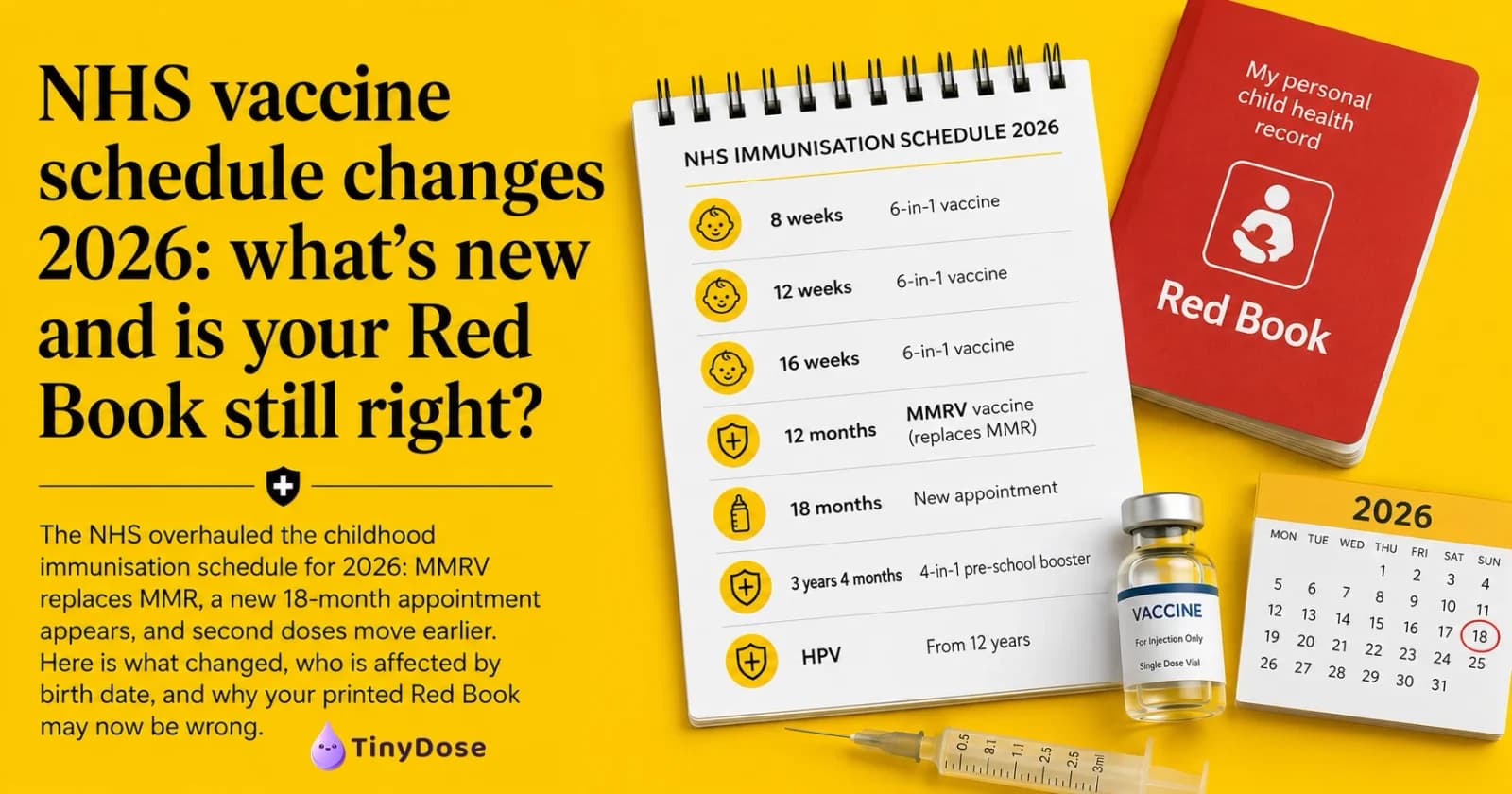
NHS vaccine schedule changes 2026: what's new and is your Red Book still right?
The NHS overhauled the childhood immunisation schedule for 2026: MMRV replaces MMR, a new 18-month appointment appears, and second doses move earlier. Here is what changed, who is affected by birth date, and why your printed Red Book may now be wrong.
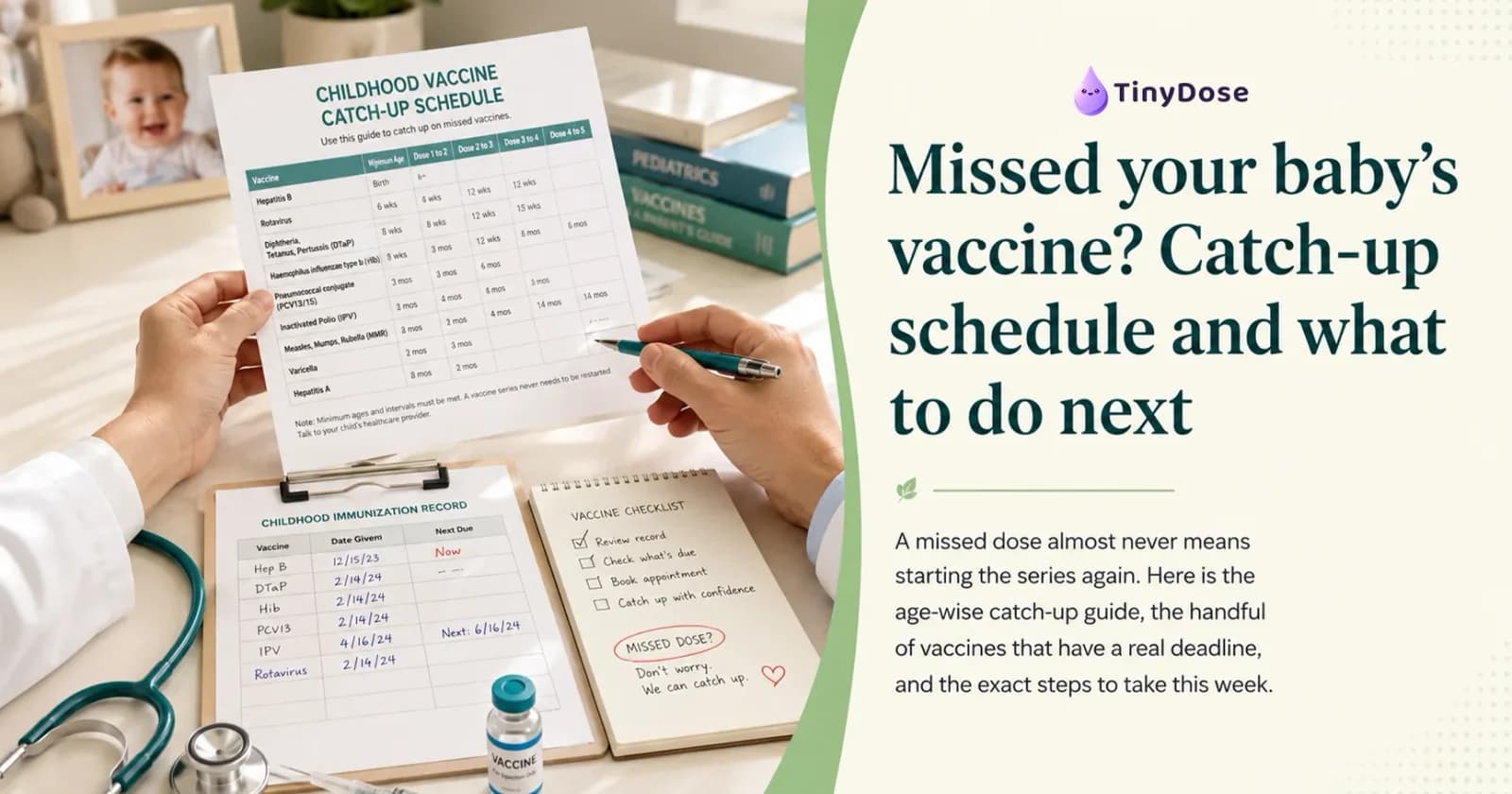
Missed your baby's vaccine? Catch-up schedule and what to do next
A missed dose almost never means starting the series again. Here is the age-wise catch-up guide, the handful of vaccines that have a real deadline, and the exact steps to take this week.
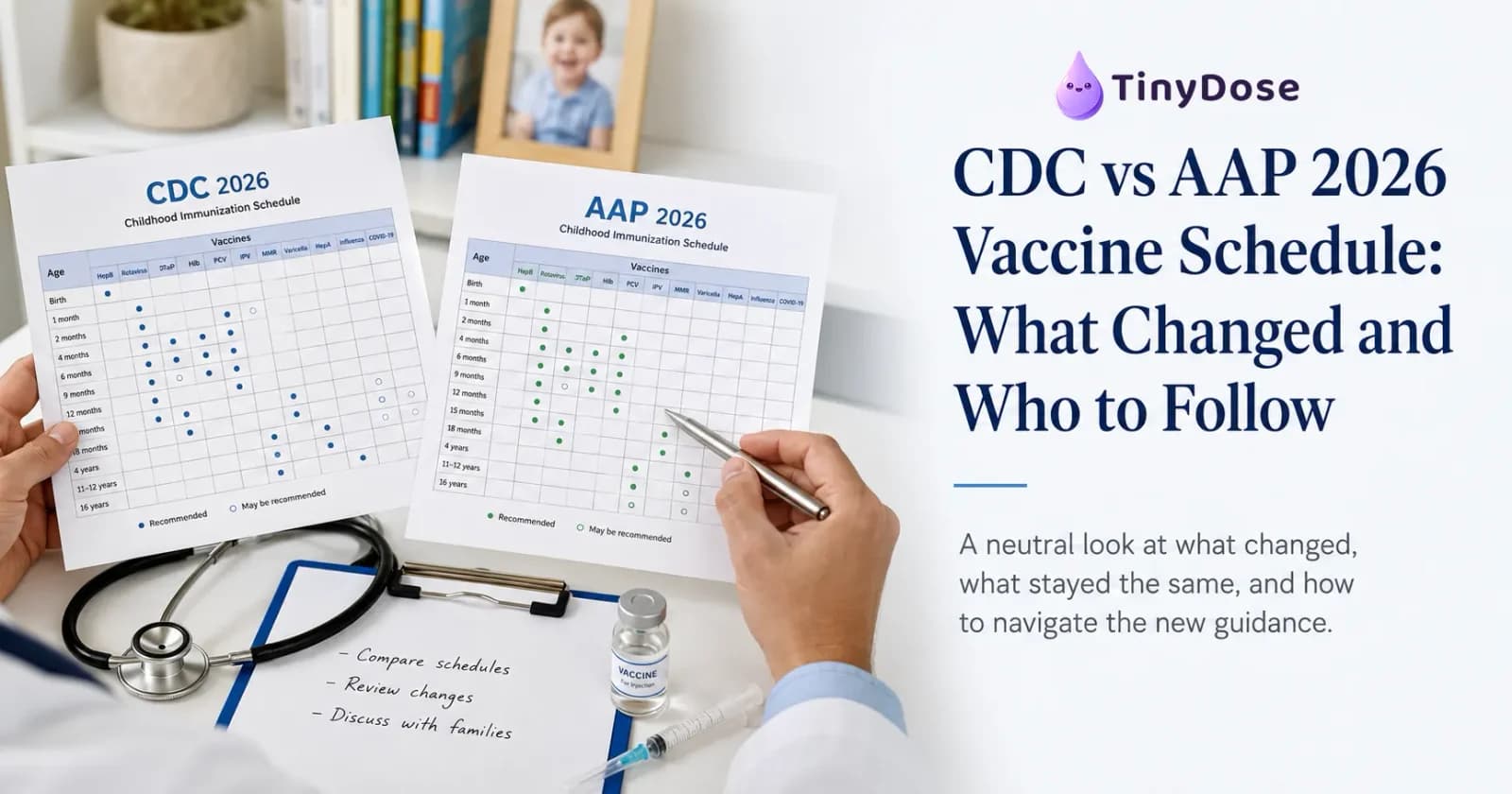
CDC vs AAP 2026 Vaccine Schedule: Which Should You Follow?
In a rare split, the CDC and the American Academy of Pediatrics have released differing childhood immunization schedules for 2026. Here is a strictly neutral look at what changed, what stayed the same, and how to navigate the new guidance.