CDC vs AAP 2026 Vaccine Schedule: Which Should You Follow?
In a rare split, the CDC and the American Academy of Pediatrics have released differing childhood immunization schedules for 2026. Here is a strictly neutral look at what changed, what stayed the same, and how to navigate the new guidance.
By Renish B, Founder
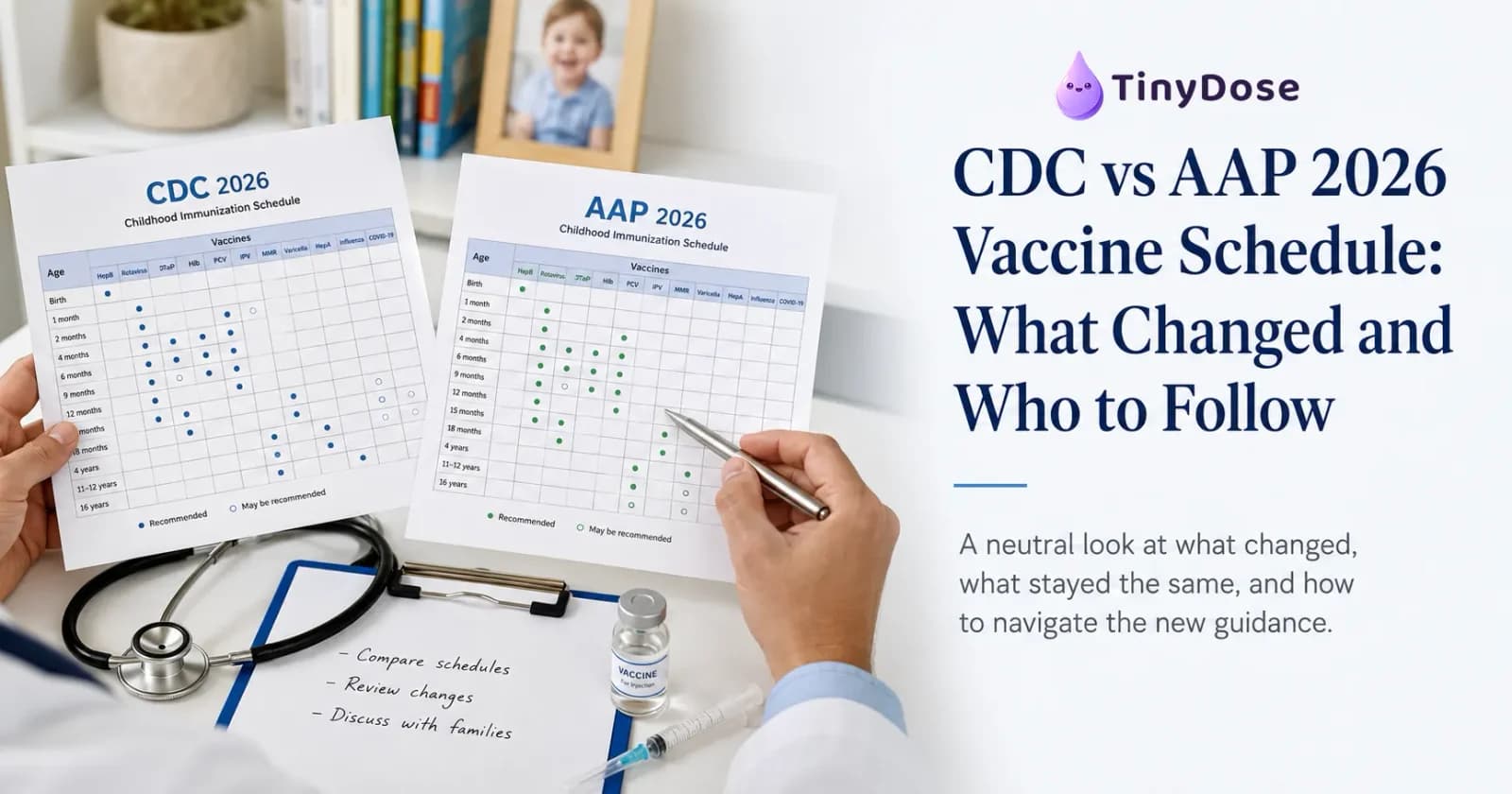
The split that broke the internet
For decades, the federal government and the nation's top pediatricians moved in lockstep when it came to childhood vaccines. If you printed a schedule from the Centers for Disease Control and Prevention (CDC) or the American Academy of Pediatrics (AAP), you were looking at the exact same chart. In 2026, that era of consensus abruptly ended.
In January, the CDC issued a revised immunization schedule developed outside of the standard Advisory Committee on Immunization Practices (ACIP) process, narrowing its list of universally recommended vaccines from 18 down to 11. The AAP pushed back, releasing an independent 2026 schedule that maintains the broader traditional list of 18 routine immunizations.
The result is a fractured landscape. Parents are walking into pediatric clinics with two different, completely legitimate printouts and asking one very reasonable question: Which one are we supposed to follow?
Here is the bottom line on what differs, what they agree on, and the financial reality of your choices.
Where the CDC and AAP still agree
Before diving into the friction, it is worth noting the foundation remains solid. Both the CDC and the AAP still universally recommend the core vaccines that have defined early childhood care for generations.
If you look at both schedules side by side, both organizations recommend routine vaccination for:
- Measles, mumps, and rubella (MMR)
- Diphtheria, tetanus, and pertussis (DTaP/Tdap)
- Polio (IPV)
- Haemophilus influenzae type B (Hib)
- Pneumococcal disease (PCV)
- Varicella (Chickenpox)
If your primary concern is hitting the baseline requirements for standard school entry across most states, both schedules will get you there.
The vaccines causing the debate
The divergence comes down to categorization. The CDC did not ban or recall any vaccines. Instead, it moved seven vaccines out of the "routine for everyone" bucket and into conditional categories: either "recommended for high-risk groups" or "shared clinical decision making", which essentially means you and your doctor discuss it based on your specific situation.
The AAP, backed by a dozen other medical organizations, kept these same seven firmly in the "routine for everyone" column.
Here is the breakdown of the split:
- Hepatitis A and Hepatitis B
The CDC now suggests these primarily for higher-risk groups, modeling the schedule largely after European countries like Denmark. The AAP argues the U.S. health system requires broader community protection and maintains the universal recommendation. - Rotavirus, influenza, and COVID-19
The CDC moved these to the shared clinical decision making category. The AAP kept them as routine, noting that young children are inherently high risk by age alone. - Meningococcal disease (MenACWY and MenB)
Shifted to high-risk by the CDC, while the AAP continues to recommend them routinely. - HPV
The CDC now recommends a single dose at ages 11 to 12. The AAP still recommends a two-dose series starting at ages 9 to 12, citing a need for further review before dropping the second shot.
The insurance question
When federal guidelines shift, the immediate follow-up question is usually about money. If the CDC says a vaccine is no longer "routine," will your insurance still pay for it if your pediatrician follows the AAP schedule?
Yes. Federal officials have confirmed that insurance coverage and the Vaccines for Children (VFC) program remain intact for all 18 vaccines, regardless of their new categorization. You will not suddenly face a massive out-of-pocket bill if you and your doctor decide to stick with the AAP's broader list.
Next steps for parents
This is not a debate you have to settle on the internet. The shift in federal categorization specifically emphasizes "shared clinical decision making," which is a bureaucratic way of saying you should talk to your pediatrician.
Print both schedules if it helps you feel prepared, but let your doctor contextualize the risk factors for your specific child, your family's travel habits, and your local community's health data.
Managing this shifting landscape is exactly why we built TinyDose. Whether your family opts for the streamlined 11-vaccine CDC path or the comprehensive 18-vaccine AAP schedule, TinyDose adapts to your choice. You input the strategy you and your doctor agreed upon, and the app tracks your doses, calculates the ideal spacing, and manages your medical budget without judgment.
The goal is not to pick a team. The goal is to make an informed choice for your family and execute it safely.
Common questions
What is the difference between the 2026 CDC and AAP vaccine schedules?
- The CDC's 2026 schedule reduced universally recommended childhood vaccines from 18 to 11, moving seven (like Hepatitis A and Rotavirus) to high-risk or shared decision-making categories. The AAP maintained its recommendation for all 18 vaccines to remain routine for all children.
Will insurance still cover vaccines not on the routine 2026 CDC schedule?
- Yes. Insurance plans and the federal Vaccines for Children (VFC) program continue to cover all 18 vaccines previously considered routine, even if the CDC has shifted them to different categories.
Which vaccines do the CDC and AAP still agree on in 2026?
- Both the CDC and AAP continue to universally recommend core vaccines including MMR (measles, mumps, rubella), DTaP (diphtheria, tetanus, pertussis), Polio, Hib, PCV (pneumococcal), and Varicella.
Keep reading
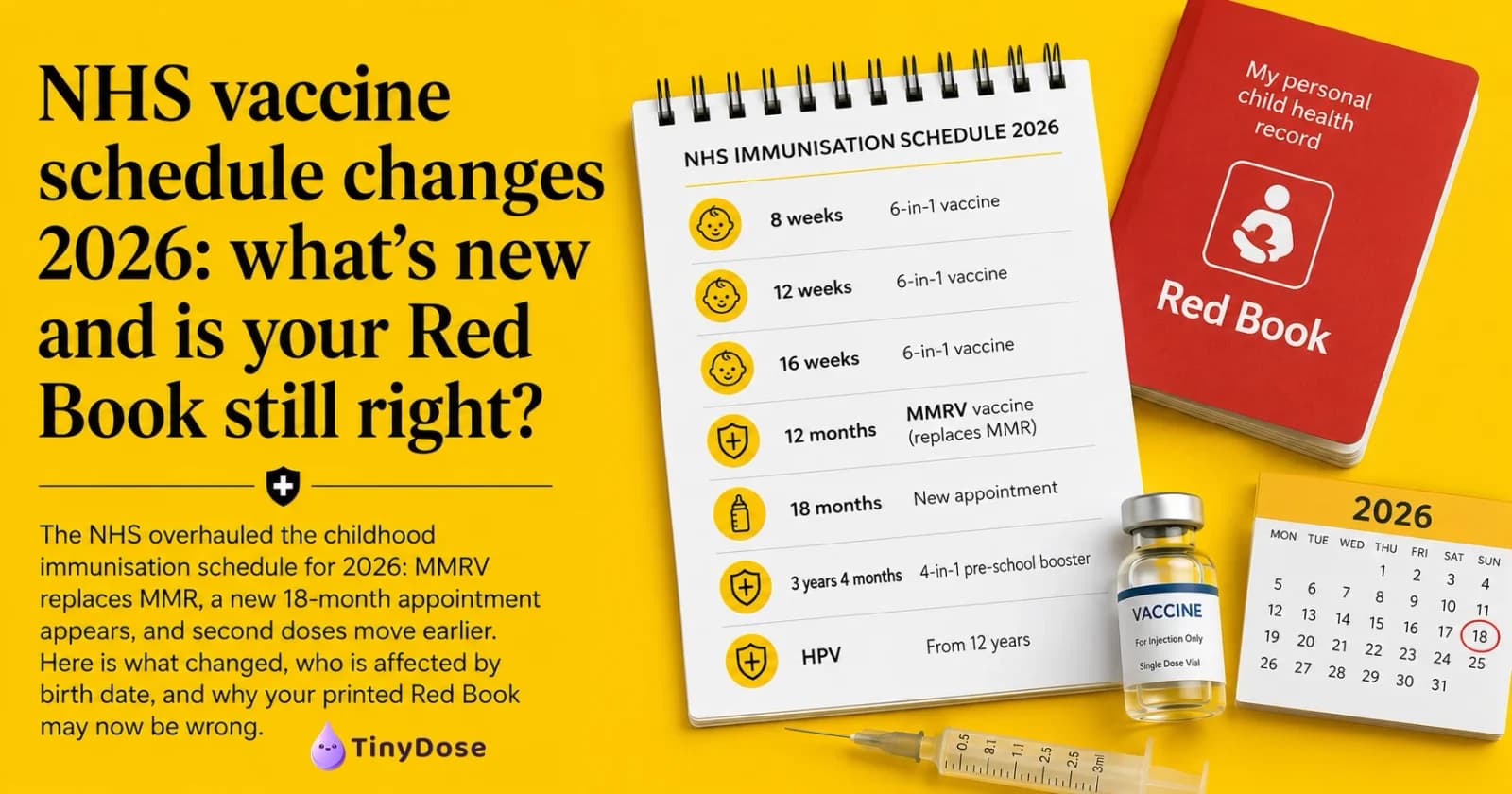
NHS vaccine schedule changes 2026: what's new and is your Red Book still right?
The NHS overhauled the childhood immunisation schedule for 2026: MMRV replaces MMR, a new 18-month appointment appears, and second doses move earlier. Here is what changed, who is affected by birth date, and why your printed Red Book may now be wrong.

Missed your baby's vaccine? Catch-up schedule and what to do next
A missed dose almost never means starting the series again. Here is the age-wise catch-up guide, the handful of vaccines that have a real deadline, and the exact steps to take this week.
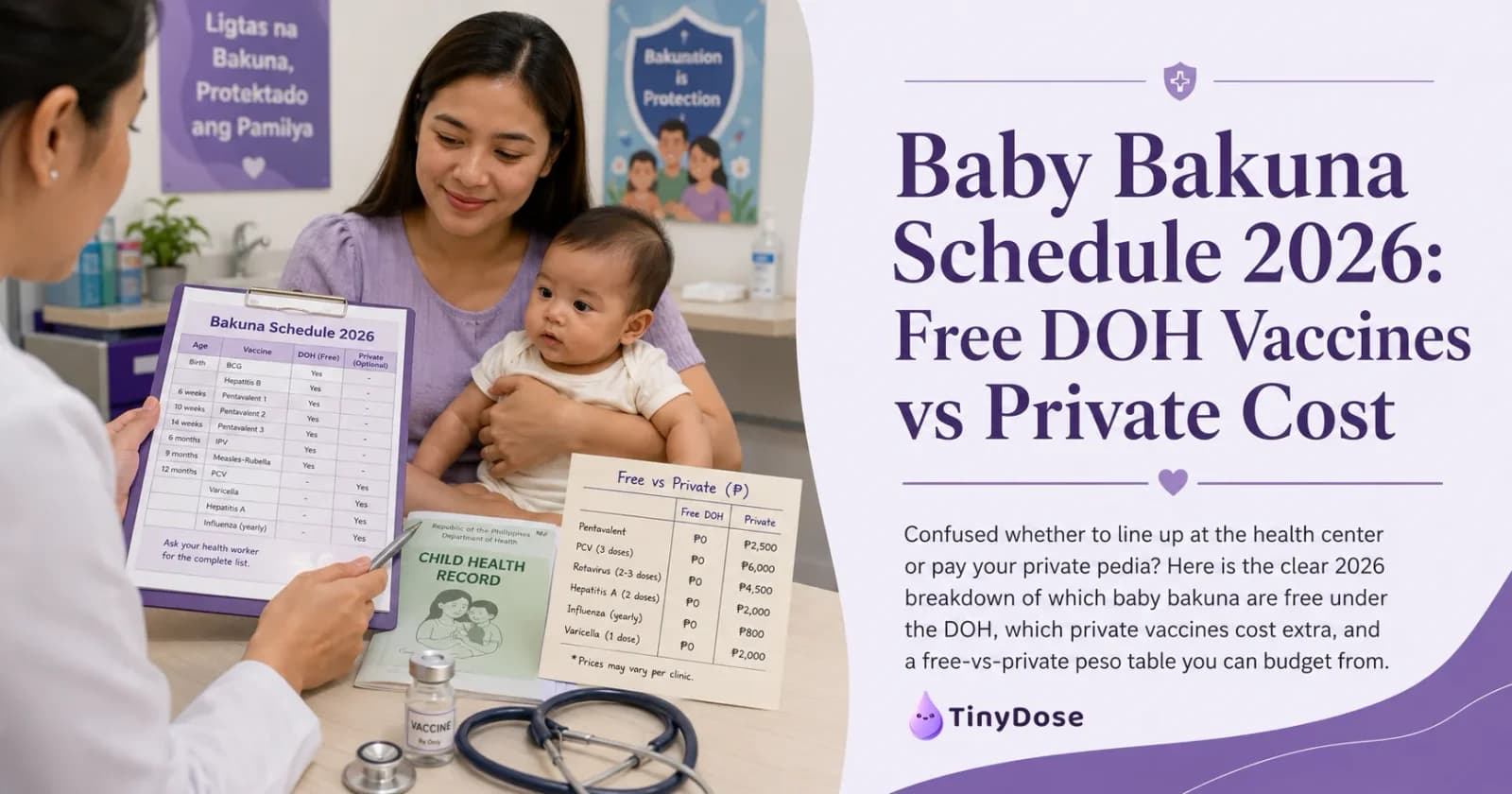
Baby Bakuna Schedule 2026: Free DOH Vaccines vs Private Cost
Confused whether to line up at the health center or pay your private pedia? Here is the clear 2026 breakdown of which baby bakuna are free under the DOH, which private vaccines cost extra, and a free-vs-private peso table you can budget from.