Baby Vaccination Cost in India 2026: Govt Free vs Private Price List
Planning your baby's medical budget? Here is the complete 2026 breakdown of free government UIP vaccines versus private hospital costs, including a brand-by-brand comparison of painful and painless shots.
By Renish B, Founder
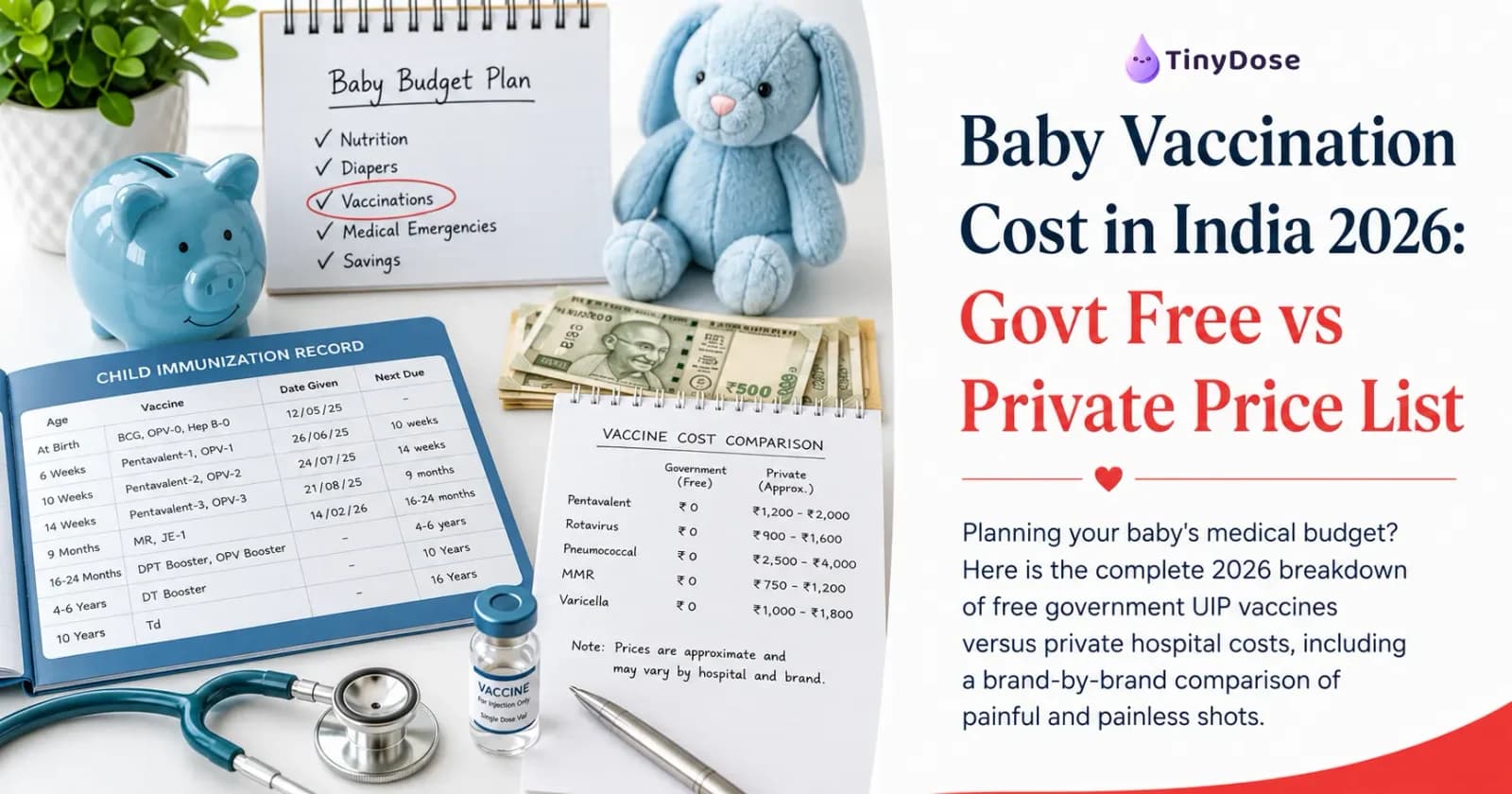
The true cost of immunizing your baby in 2026
Your newborn's first pediatrician visit often brings an unexpected financial reality check. The Indian Academy of Pediatrics (IAP) vaccination schedule is extensive, and private hospital bills for a baby's first year can escalate quickly.
Parents in India have two distinct paths: the free Universal Immunization Programme (UIP) run by the government, and the private healthcare route. Understanding the exact cost differences, vaccine brands, and the choice between painful and painless shots is the most effective way to plan your medical budget.
The free government route (UIP)
The Ministry of Health provides a comprehensive list of vaccines at zero cost through government hospitals, Primary Health Centres, and Anganwadis. These vaccines meet strict WHO standards and use the same core formulations deployed globally.
Under the 2026 UIP schedule, your child receives protection against 12 major diseases:
- BCG for Tuberculosis at birth
- Hepatitis B at birth
- Pentavalent vaccine (Diphtheria, Tetanus, Pertussis, Hepatitis B, and Hib) at 6, 10, and 14 weeks
- Polio drops (OPV) and injectable polio vaccine (IPV)
- Measles and Rubella (MR) at 9 to 12 months
- Rotavirus (for severe diarrhea) and Pneumococcal Conjugate Vaccine (PCV)
The private clinic route (IAP Schedule)
Private pediatricians recommend the broader IAP schedule, which includes the baseline government vaccines plus additional coverage for diseases like Influenza, Typhoid, Varicella (Chickenpox), and Hepatitis A.
The main reason parents opt for private clinics is the availability of acellular (DTaP) vaccines, widely known as "painless" vaccines.
Painful (DTwP) vs Painless (DTaP) shots
The traditional DPT vaccine uses whole-cell pertussis (DTwP). It builds excellent immunity but frequently causes a high fever, localized swelling, and irritability in babies. The painless DTaP variant uses purified pertussis components, drastically reducing fever and swelling while using the exact same needle size.
A traditional painful combination shot costs ₹500 to ₹1,000. In contrast, a painless 6-in-1 Hexavalent shot ranges from ₹2,500 to ₹4,330 per dose, and your baby will need three primary doses.
2026 Private vaccine price list and brand comparison
If you choose a private hospital, your total vaccine bill for the first year will range from ₹20,000 to ₹35,000. Rates fluctuate slightly by city. Tier 1 cities like Delhi, Bengaluru, and Mumbai often see higher total costs because clinics add substantial administration and consultation fees on top of the Maximum Retail Price (MRP).
Here is the exact breakdown of per-dose vaccine costs in the private sector for 2026:
| Vaccine Type | Standard Cost | Premium (Painless) Cost | Common Brands & 2026 MRP |
|---|---|---|---|
| 6-in-1 (Hexavalent) | ₹500 to ₹1,000 | ₹2,500 to ₹4,330 | Hexaxim (₹4,330), Easy Six (₹2,995), Infanrix Hexa (₹3,735) |
| Pneumococcal (PCV) | Free at Govt clinics | ₹2,280 to ₹3,991 | Prevenar 13 (₹3,991), Pneumosil (₹2,280) |
| Rotavirus | Free at Govt clinics | ₹1,000 to ₹1,770 | Rotarix (₹1,770), RotaSure |
| Influenza (Flu) | Not covered by Govt | ₹800 to ₹2,500 | Vaxigrip, Influvac |
| Typhoid Conjugate | Not covered by Govt | ₹1,500 to ₹2,000 | Typbar TCV |
| Varicella (Chickenpox) | Not covered by Govt | ₹1,500 to ₹3,000 | Varilrix, Okavax |
| Hepatitis A | Not covered by Govt | ₹1,500 to ₹2,500 | Havrix, Biovac-A |
The smart mix-and-match approach
You are not locked into one system. Pediatricians recognize that the private schedule is expensive and often support a hybrid approach to help parents manage costs without skipping doses.
You can receive the heavy-hitters like BCG, standard Polio drops, and the MMR vaccine for free at your local government health center. You can then reserve your private clinic visits specifically for the painless Hexavalent shots at 6, 10, and 14 weeks, or for private-only vaccines like Influenza and Typhoid.
Keeping all entries in a single physical vaccination book and syncing them to a digital dose tracker app ensures you maintain the correct intervals between shots, regardless of whether a government nurse or a private doctor administered them.
Common questions
What is the cost of painless vaccination in India in 2026?
- A painless Hexavalent (6-in-1) vaccine costs between ₹2,500 and ₹4,330 per dose in private clinics. Common brands include Hexaxim, Easy Six, and Infanrix Hexa.
Are baby vaccines free in government hospitals in India?
- Yes, under the Universal Immunization Programme (UIP), government hospitals provide 12 essential vaccines entirely free of cost, including BCG, Polio, Hepatitis B, Rotavirus, and PCV.
Why is the painless vaccine more expensive?
- Painless vaccines (DTaP) use purified acellular pertussis components instead of whole cells. This advanced manufacturing process significantly reduces the chance of fever and swelling, leading to a higher premium.
Keep reading
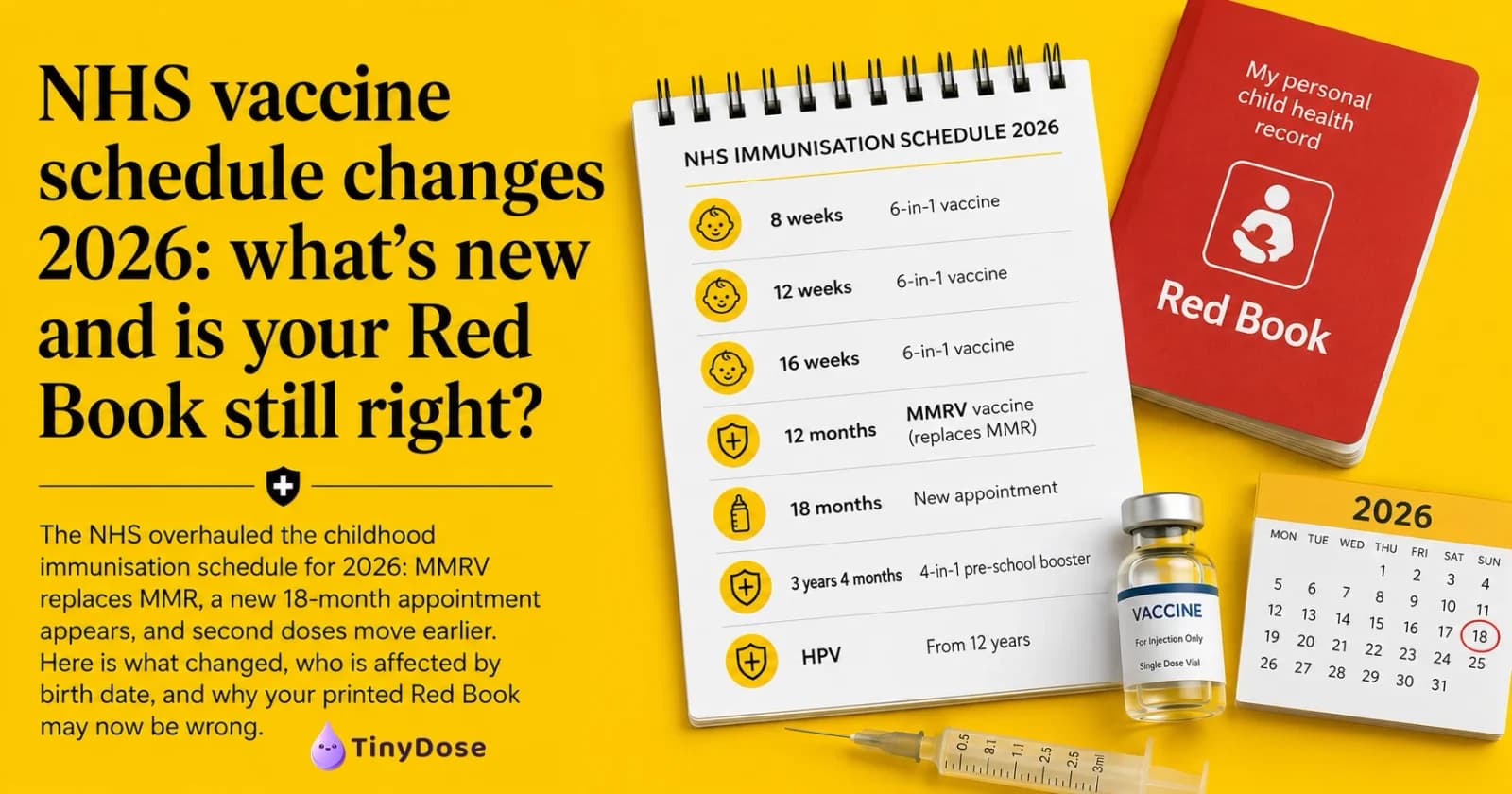
NHS vaccine schedule changes 2026: what's new and is your Red Book still right?
The NHS overhauled the childhood immunisation schedule for 2026: MMRV replaces MMR, a new 18-month appointment appears, and second doses move earlier. Here is what changed, who is affected by birth date, and why your printed Red Book may now be wrong.
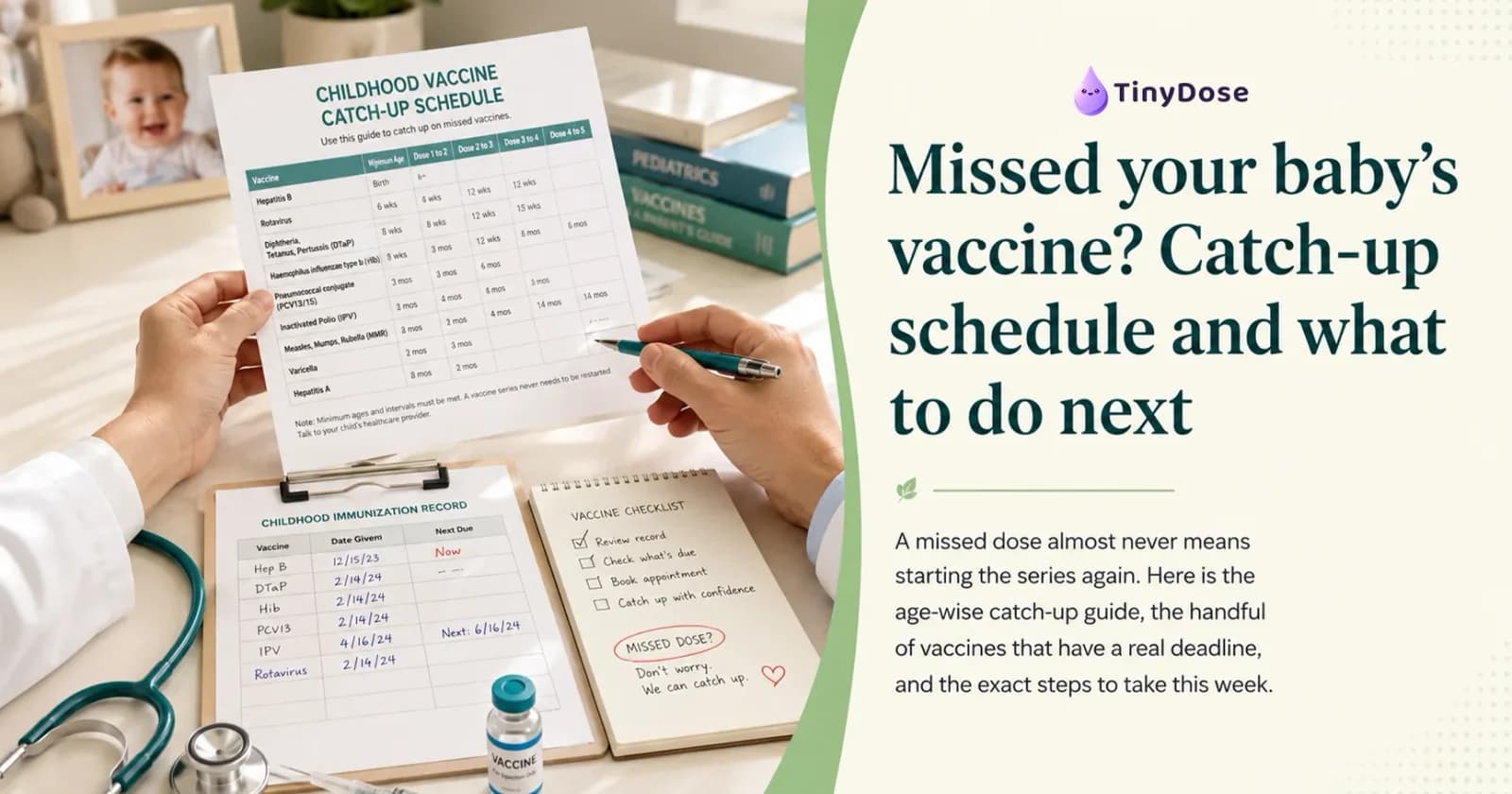
Missed your baby's vaccine? Catch-up schedule and what to do next
A missed dose almost never means starting the series again. Here is the age-wise catch-up guide, the handful of vaccines that have a real deadline, and the exact steps to take this week.
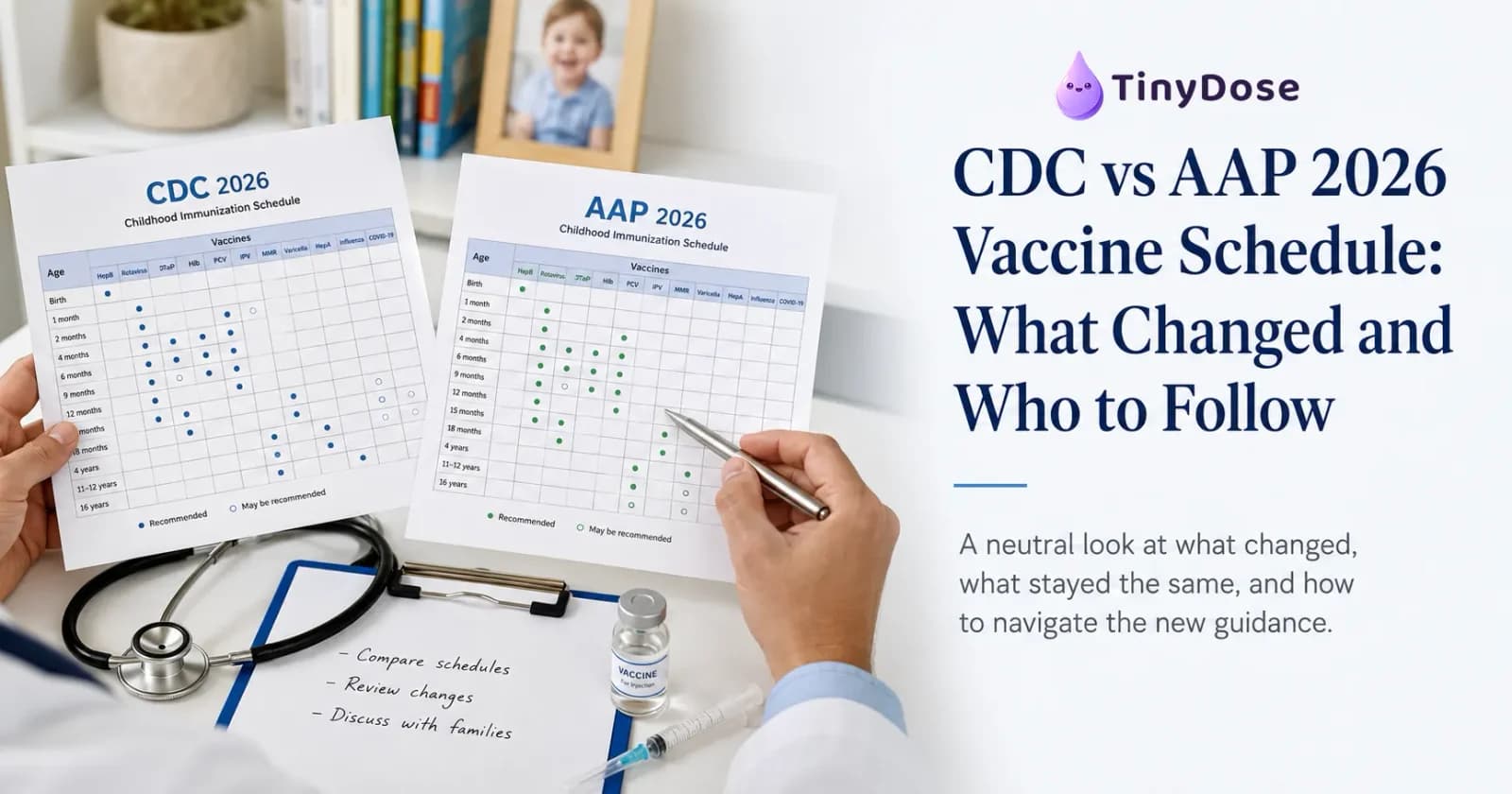
CDC vs AAP 2026 Vaccine Schedule: Which Should You Follow?
In a rare split, the CDC and the American Academy of Pediatrics have released differing childhood immunization schedules for 2026. Here is a strictly neutral look at what changed, what stayed the same, and how to navigate the new guidance.