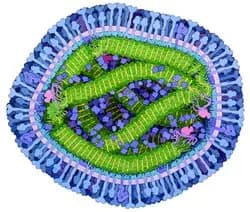
- What it is
- A highly contagious viral infection causing fever, rash and serious complications.
- Main symptom
- High fever, often 40°C or above
- How it spreads
- Airborne, spread through respiratory droplets and can remain in the air for up to 2 hours after an infected person has left the room.
- Prevented by
- MMR, MMRV, MR
About Measles
Measles is one of the most contagious infections known. It spreads through the air and causes a high fever followed by a distinctive red rash. While many children recover fully, measles can lead to pneumonia and, rarely, brain inflammation. Two doses of the MMR vaccine give strong, lasting protection.
Symptoms
- High fever, often 40°C or above
- Runny nose, cough and red watery eyes (appearing 2-4 days before the rash)
- Tiny white spots inside the mouth (Koplik spots), an early diagnostic sign
- A red, blotchy rash that starts on the face and spreads downward over the body
How it spreads
Airborne, spread through respiratory droplets and can remain in the air for up to 2 hours after an infected person has left the room.
Why it's serious
Measles is one of the leading vaccine-preventable causes of death in children worldwide. It is not a harmless childhood illness. Complications can be severe and the virus also temporarily weakens the immune system for months after recovery.
- Pneumonia, the most common serious complication
- Ear infections
- Brain inflammation (encephalitis), occurs in about 1 in 1,000 cases
- Death, still occurs in malnourished or immunocompromised children
Most at risk: Unvaccinated children of any age. Children under 5 and adults over 20 tend to have more severe illness.
How to prevent Measles
Vaccination is the most effective protection. Measles is prevented by:
Treatment
There is no specific antiviral treatment for measles. Supportive care includes rest, fluids, vitamin A supplements (which reduce severity), and treatment of any bacterial complications with antibiotics.
Common questions
Sources
- Measles vaccines: WHO position paper · WHO, 2017.
- India Measles-Rubella Campaign · Govt of India, 2023.
Information on this page is compiled from authoritative public health sources and written in TinyDose's own voice. It is intended for general understanding only. Always follow your pediatrician's guidance.
From the blog
All guides →This information is provided by TinyDose for general understanding only and is not medical advice. Vaccine names, ages and doses can vary by country, brand and individual circumstances. Always follow the guidance of your pediatrician or local health authority for your child’s vaccination schedule.
© 2026 Alpstack · TinyDose