Where to launch a startup: a stage-by-stage guide to product launch sites
There are more than 80 places to launch a product. The ones that matter depend on who you are launching to and when. A stage-by-stage guide, from waitlist to review sites.
By Renish BFounder, Alpstack
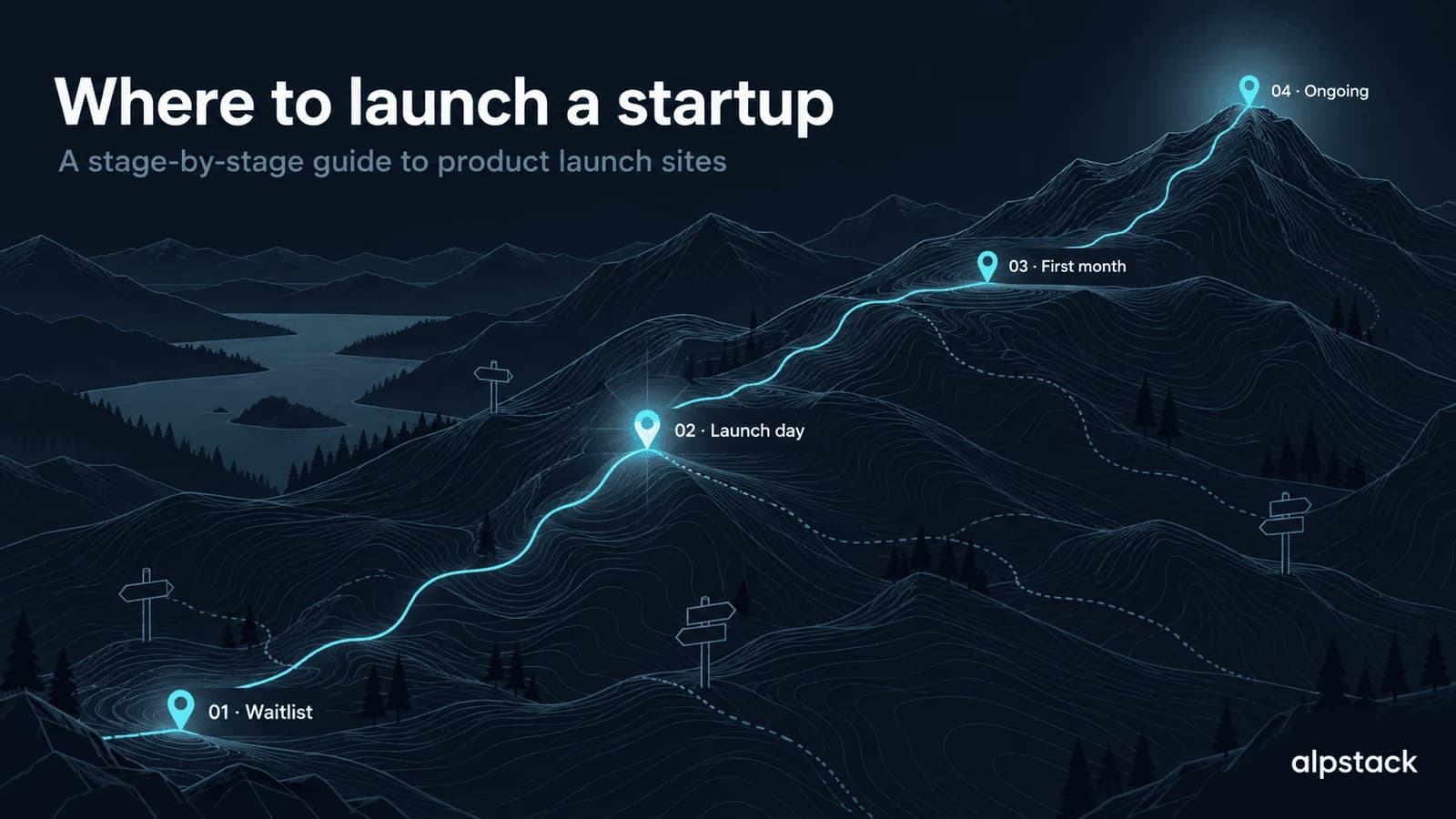
"Where should I launch my startup?" is usually asked as if there were one right answer. There isn't. There are more than 80 product launch sites, communities, directories and app stores worth knowing about, and posting to all of them on the same morning is the most common way to waste a launch.
The better question is: who are you launching to, and in what order? Answer that and the list of places narrows to a handful, each with a clear job.
This guide walks through that order, stage by stage. The full directory, with every site grouped by category, lives at Product launch sites.
Start with who you are launching to
Every launch site has an audience with a shape. Product Hunt skews toward early adopters and people who work in tech. Hacker News is engineers and founders who will read your landing page critically. Indie Hackers is bootstrapped founders who care about the story and the numbers. G2 and Capterra are buyers comparing tools with a budget already approved.
Launching in front of the wrong audience does not just underperform. It gives you misleading feedback. A developer tool that flops on a general launch board may be a perfectly good developer tool that simply met the wrong crowd.
So match the product to the venue first:
| If you are launching | Start with | Then add |
|---|---|---|
| A developer tool, API or library | Show HN, DevHunt, GitHub | DEV, Hashnode, the VS Code or JetBrains marketplace |
| B2B SaaS | Product Hunt, r/SaaS | SaaSHub, G2, Capterra, AlternativeTo |
| An AI product | Product Hunt, There's An AI For That | Futurepedia, Toolify, FutureTools |
| An indie or micro-SaaS product | Indie Hackers, r/SideProject, Uneed | MicroLaunch, Tiny Startups, Peerlist Launchpad |
| A browser extension or plugin | Chrome Web Store (or the relevant store) | Firefox and Edge add-ons, Product Hunt |
| A design tool | Product Hunt, Dribbble | Designer News, Behance |
If your product spans two rows, pick the audience that is most likely to pay, not the one that is largest.
Stage 1: before launch
The most useful launch-day asset is a list of people who already want the product. Build it before you go public.
- BetaList is made for pre-launch products. A listing collects waitlist signups from people who actively browse for things that are not out yet.
- BetaPage and Betafy serve the same stage, with Betafy leaning toward recruiting testers who will give feedback.
- WIP and Makerlog are build-in-public communities. Posting progress there is less a launch than a slow accumulation of people who have watched the product take shape.
What you want out of this stage: a waitlist, a handful of people who have used an early version and will say so in public, and a clear one-line description that survived contact with strangers. You will need all three on launch day.
Stage 2: launch week
This is where most of the attention goes, and where the most avoidable mistakes happen. Two principles matter more than any single platform.
Concentrate, then stagger. Pick two or three primary venues where your audience lives and give each one a full day of attention. Then spread the smaller launch boards across the following days and weeks. A launch site is not a place you post to; it is a conversation you have to be present for.
Answer everything. On every one of these platforms, the maker who replies quickly and specifically to comments does better than the one who posts and leaves. The comments are also where you learn what people misunderstood about your product.
Product Hunt
Still the largest daily launch board, and still worth a planned launch day rather than a quiet listing. Prepare the tagline, the gallery images and a first comment that explains why you built it, before the day starts. Tell your waitlist when you are live. Then stay on the page all day.
Hacker News (Show HN)
Show HN rewards things people can try immediately. Use a plain, descriptive title: the product name and what it does, with no marketing language. Link directly to something usable, not a signup wall. Expect blunt feedback, and treat it as the most valuable free product review you will get.
Communities like r/SideProject, r/SaaS, r/microsaas, r/indiehackers and r/EntrepreneurRideAlong can send real users, but each has its own rules about self-promotion. Read them first. Posts framed as "here is what I built, I would like feedback on X" are received far better than announcements. Space them out rather than cross-posting the same text on the same day.
The smaller launch boards
Uneed, Peerlist Launchpad, MicroLaunch, Fazier, DevHunt, Tiny Startups and the other indie boards each bring a smaller, often more engaged audience. Several run on weekly or daily cycles with queues. Spread them through the weeks after your main launch: each one is a small second wind rather than a competing claim on the same day.
Stage 3: the first month
The launch spike fades within days. This stage is about turning it into things that keep working.
Write it up. A post on Indie Hackers with real numbers (signups, conversion, what worked, what did not) often outperforms the launch itself. A technical write-up on DEV, Hashnode or HackerNoon about how you built it reaches developers who would never browse a launch board, and keeps being found through search for months.
List on the evergreen directories. AlternativeTo and SaaSHub are where people go when they are searching for a replacement for a tool they already use. That is high-intent traffic that does not depend on a launch day. List your product against the tools it replaces.
Batch the startup directories. Launching Next, StartupBase, Startup Buffer, PitchWall and similar directories take little effort each. Do them in one sitting, reuse the same copy and assets, and expect a slow trickle rather than a spike.
Stage 4: ongoing
Some channels only pay off over time, and some only apply if your product fits a particular ecosystem.
- Review platforms like G2, Capterra, GetApp, Software Advice and TrustRadius matter for B2B software because buyers use them to shortlist. A profile with no reviews does little, so ask your earliest satisfied customers to leave one.
- Ecosystem stores are distribution in themselves. If you build on Chrome, VS Code, Shopify, Slack, Atlassian, WordPress or Salesforce, that platform's store is often where your users search first.
- AI directories such as There's An AI For That, Futurepedia and Toolify are worth a listing when AI is central to what the product does, not when it is a feature.
- Marketplaces trade differently. AppSumo can bring early revenue through lifetime deals, at the cost of margin and a customer base that expects a bargain. Gumroad, Lemon Squeezy and CodeCanyon suit digital products and source code.
What product launch sites can and cannot do
It helps to be clear-eyed about the return.
A launch site can bring you your first users, honest feedback, a burst of traffic, and mentions that make the product easier to find by name. The evergreen directories can bring a steady stream of people actively looking for what you built.
A launch site will not, on its own, give you a durable SEO advantage. Many listings are nofollow, so their direct ranking value is modest. It will not fix a product that does not yet solve a clear problem. And it will not replace the slower work of content, word of mouth and talking to customers.
Paid placements deserve the same scrutiny. Several boards sell featured slots or a faster route through the queue. Pay for one only when its visitors look like your buyers, not because the site is large.
A short launch checklist
- Write one sentence that says what the product does and for whom. Test it on strangers.
- Build a waitlist on BetaList or through your own landing page.
- Choose two or three primary venues that match your buyer.
- Prepare assets once: logo, tagline, three to five screenshots, a short demo, and a first comment explaining why you built it.
- Launch on the primary venues on separate days and stay present to answer every comment.
- Spread the smaller launch boards over the following weeks.
- Publish a write-up with real numbers or a technical deep dive.
- List on AlternativeTo, SaaSHub and the directories relevant to your category.
- Ask early customers for reviews on the platforms your buyers use.
- Revisit the list in a few months. New sites appear and quiet ones fade.
The full list
Every site mentioned here, and many more, is in the curated directory of product launch sites, grouped into launch platforms, beta sites, communities, developer publishing, startup directories, review sites, AI directories, marketplaces and app stores. Each entry notes what the site is actually good for, and the smaller ones are flagged so you can check they are still active before you submit.
Common questions
Is Product Hunt still worth it for a startup launch?
- Yes, for most software products aimed at early adopters or people who work in tech. It is still the largest daily launch board. It is worth a planned launch day with prepared assets and a maker who stays present, not a quiet listing.
Can I launch on several sites on the same day?
- You can, but it usually works worse. Every launch site rewards makers who answer comments quickly, and you cannot be present in five places at once. Give each primary venue its own day and spread the smaller boards over the following weeks.
How soon after launch should I list on directories?
- Within the first month. Directories like AlternativeTo and SaaSHub do not depend on a launch day, so there is no advantage to waiting, and they keep sending search traffic after the launch spike fades.
What if my launch gets little traction?
- Treat it as feedback on positioning before product. Check whether the audience matched your buyer and whether your one-line description was clear. A quiet launch on the wrong venue says little; relaunching on the right one is normal.
Keep reading
Vaccine News for Parents: Measles Deaths, HPV Gaps, and 2026–27 Season Reviews
US measles cases have climbed to 3,134 with a second infant death confirmed in Lancaster County, Pennsylvania, while an independent group has released a formal review of 2026–27 respiratory vaccines for flu, COVID-19, and RSV. Here is what parents need to know this week.
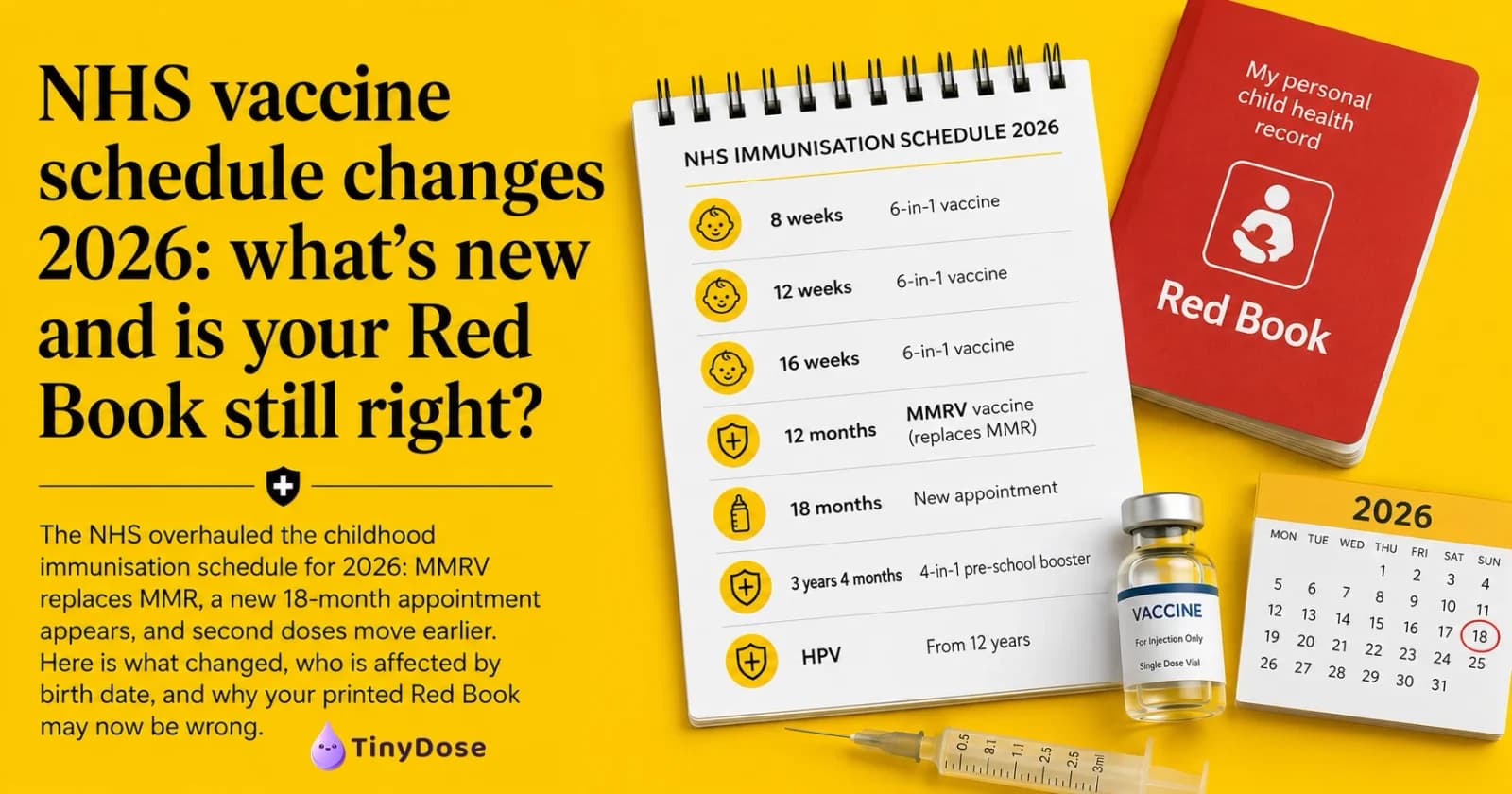
NHS vaccine schedule changes 2026: what's new and is your Red Book still right?
The NHS overhauled the childhood immunisation schedule for 2026: MMRV replaces MMR, a new 18-month appointment appears, and second doses move earlier. Here is what changed, who is affected by birth date, and why your printed Red Book may now be wrong.
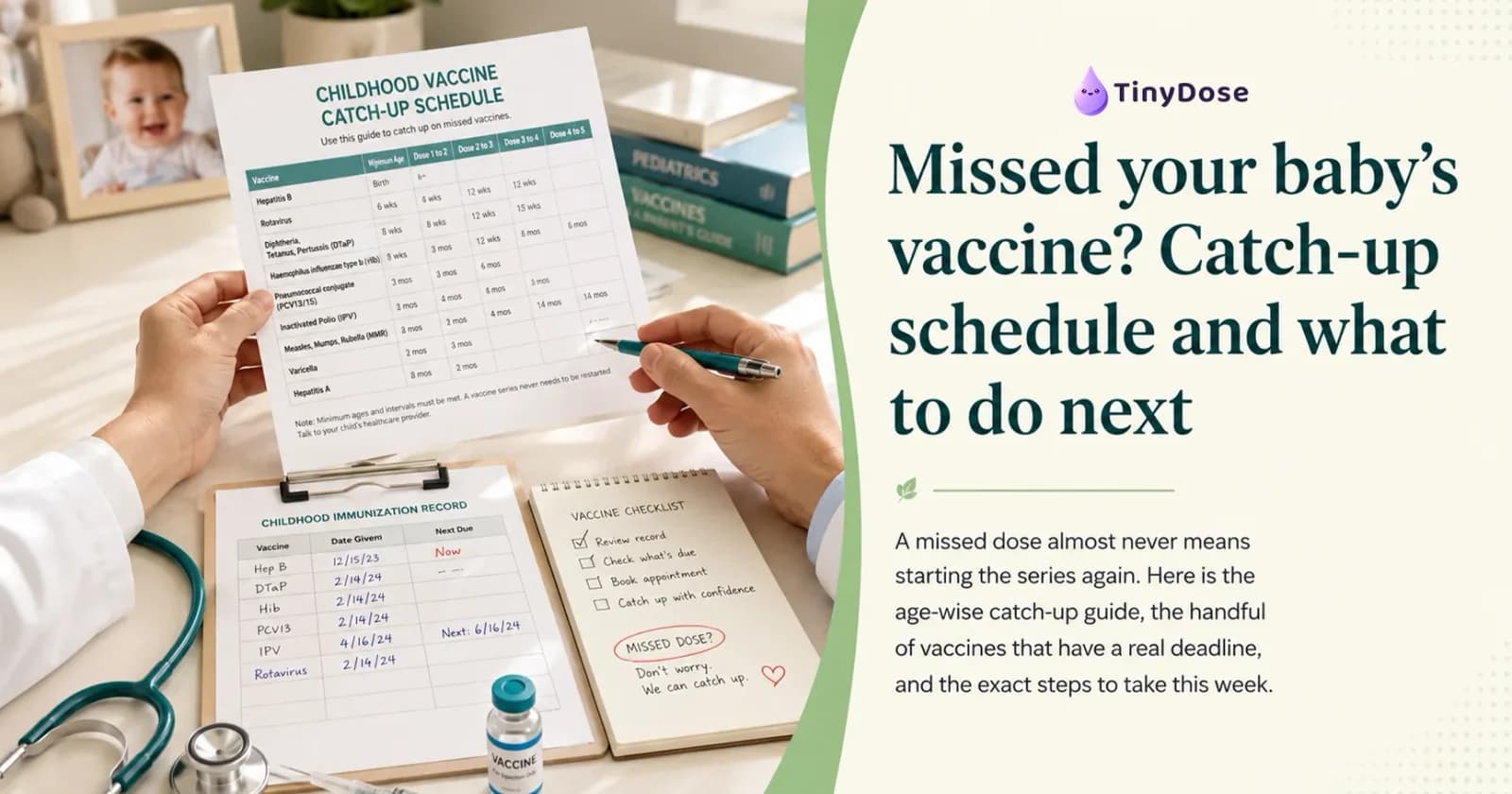
Missed your baby's vaccine? Catch-up schedule and what to do next
A missed dose almost never means starting the series again. Here is the age-wise catch-up guide, the handful of vaccines that have a real deadline, and the exact steps to take this week.